
Workplace analytics: desk occupancy, room utilization, attendance tracking
Arm yourself with sharp workplace analytics and create optimized office spaces that work for your employees.
Last updated: September 16, 2026
Trusted by innovative organizations worldwide






See it in action
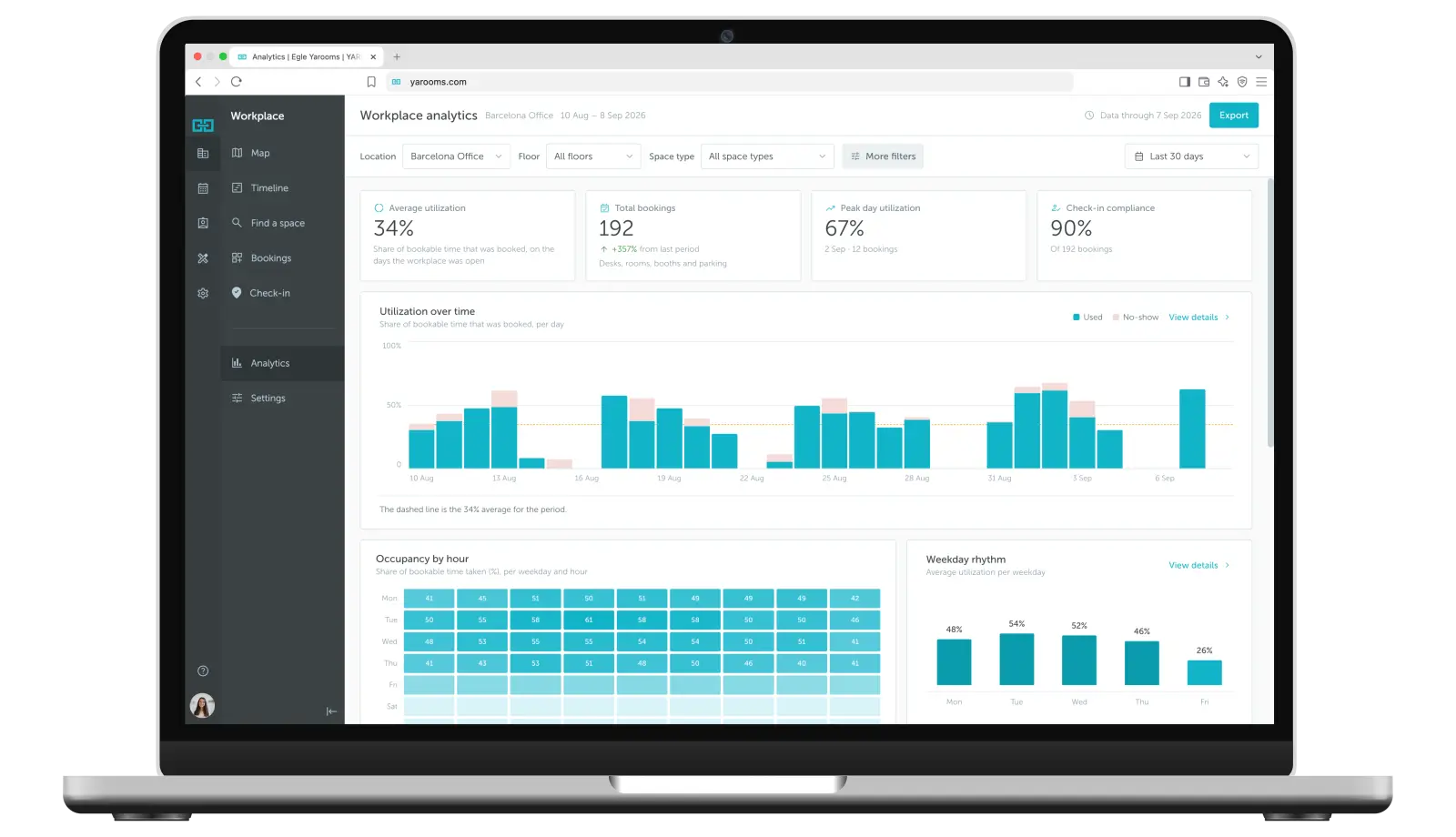
Take a quick tour of workplace analytics and see how YAROOMS turns booking, attendance, and utilization data into decisions you can act on.
Comprehensive workplace insights
Understand how your office space is used and what makes your employees satisfied
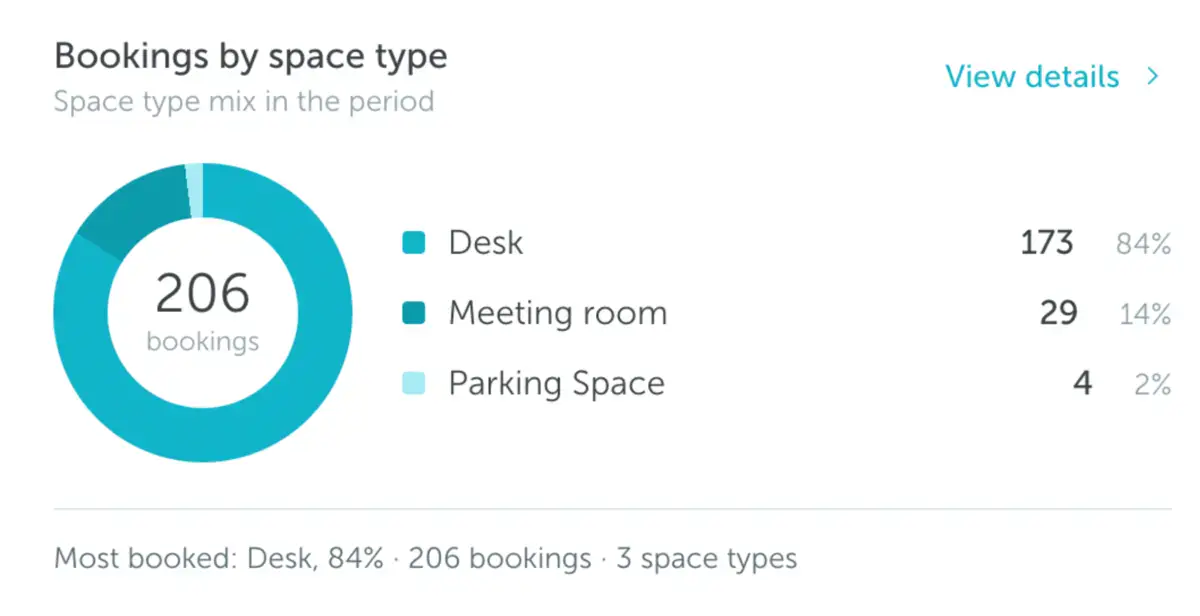
Office Utilization Analytics
Insights into average office space usage, no-show rates, and booking counts. Heat maps identify where employees gather or avoid.
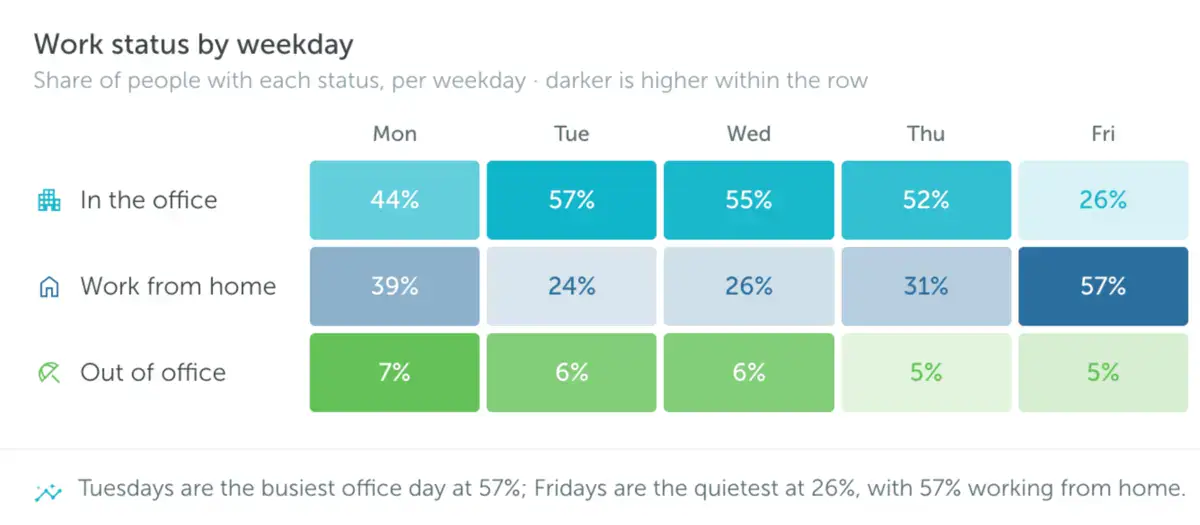
Hybrid Work Analytics
Track time employees spend in-office versus remote. Compare trends across teams and departments to inform workplace policies.
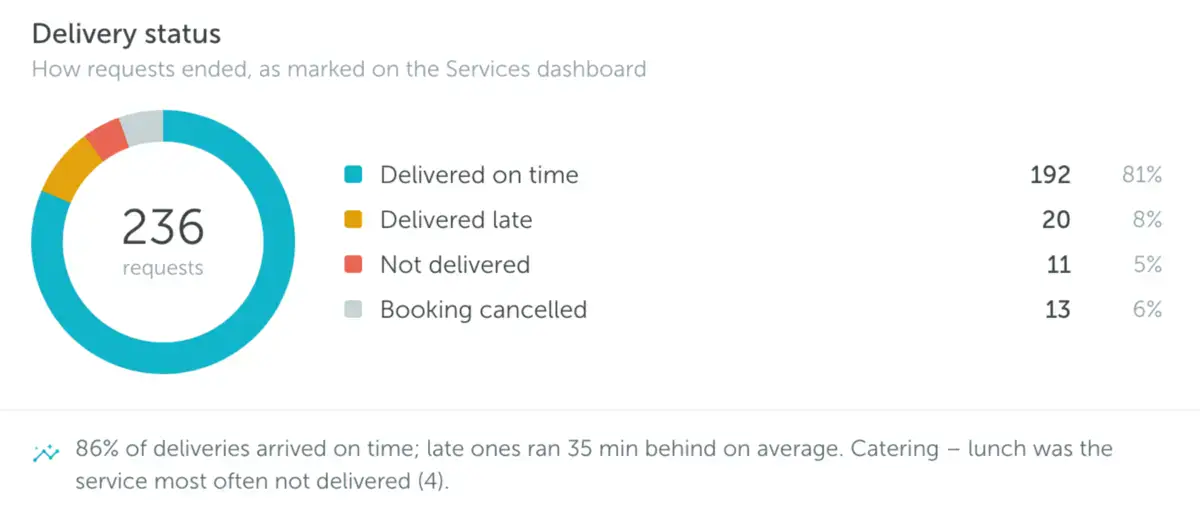
Service Utilization Analytics
Monitor bookable office services like catering, equipment, and cleaning. Break down data by service type and location.
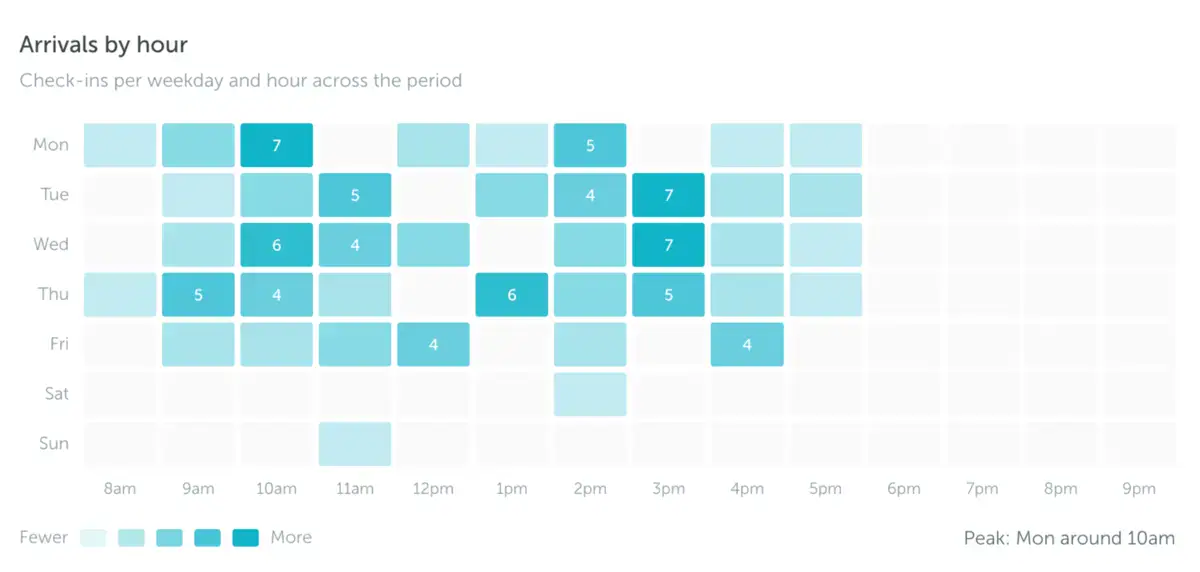
Visitor Analytics
Dashboard showing visitor traffic, host details, visit types, and check-in statuses with comprehensive reports.
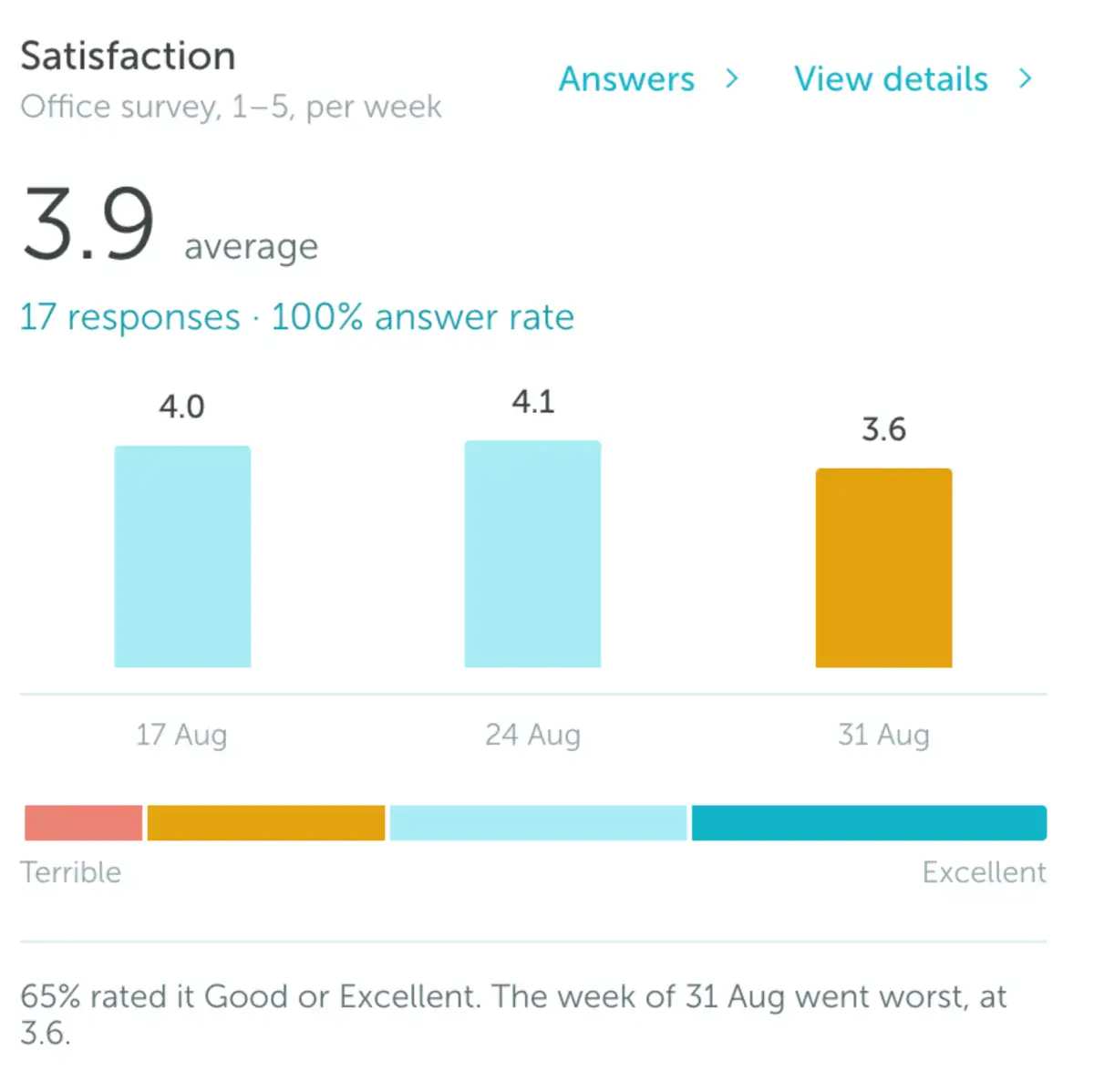
Employee Satisfaction Analytics
Survey-based reports measuring workplace experience and happiness. Compare satisfaction across individuals, groups, and locations.
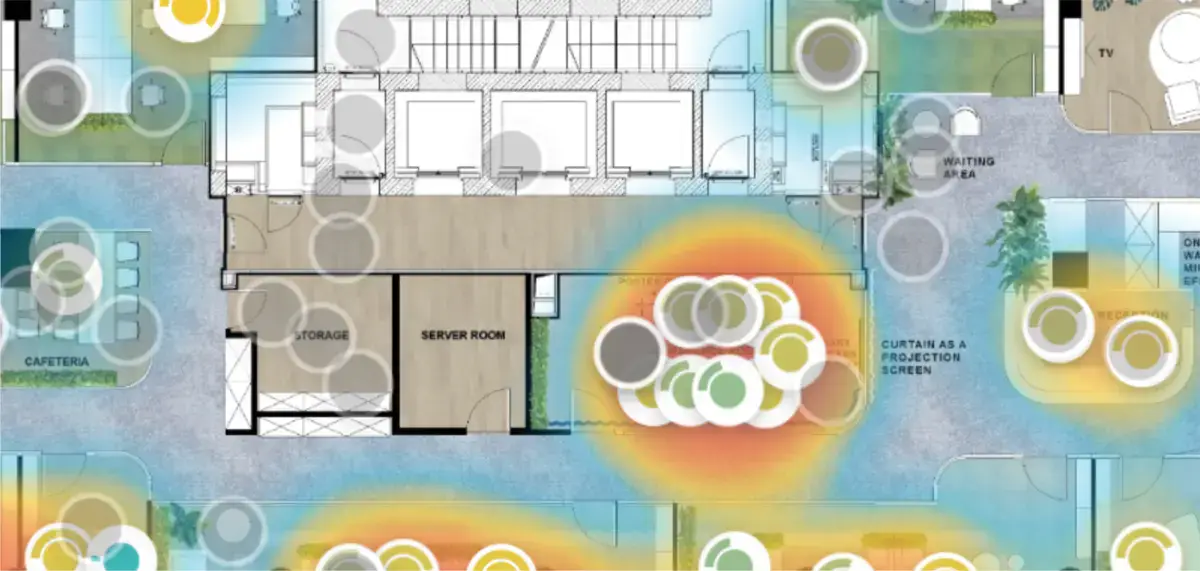
Office Heat Maps
Visual representation of space utilization patterns. Identify popular areas and underutilized zones.
Key Benefits


Workplace analytics: FAQ
Answering the most common questions about workplace analytics and how it helps business leaders make data-driven decisions.
Workplace analytics is the measurement of how office space actually gets used - which desks are booked and occupied, which meeting rooms sit empty, how many people come in on which days, and how that changes over time. It is distinct from workforce or HR analytics, which measure people rather than places.
YAROOMS reports occupancy, utilization and attendance from booking and check-in data across desks, rooms, parking and services.
No, and the distinction matters legally as well as culturally. Employee monitoring tracks individual activity and productivity. Workplace analytics tracks space: how full a floor is, which rooms go unused, whether Tuesday is busier than Thursday.
YAROOMS reports are built for space and policy decisions rather than individual assessment, and utilization views aggregate across teams, floors and locations.
YAROOMS includes the following reports:
- Office utilization - average space usage, booking counts, no-show rates
- Hybrid work - in-office versus remote, compared across teams and departments
- Service utilization - catering, equipment and cleaning, broken down by service type and location
- Visitor analytics - visitor traffic, host details, visit types, check-in status
- Employee satisfaction - survey-based, comparable across individuals, groups and locations
- Office heat maps - which zones fill up and which stay empty
Utilization is occupied capacity divided by total capacity, measured over a period. The trap is measuring bookings rather than attendance - a desk booked and never used counts as full utilization and makes an office look busier than it is.
YAROOMS separates the two: bookings show intent, check-ins show attendance, and the gap between them is usually the most useful number on the report. Measure over at least a month, and by day of week rather than as an average - the average hides the Tuesday peak that actually determines how many desks you need.
There is no universal target, because it depends on the seating model and the hybrid policy. What matters more than the average is the peak: an office comfortable at 60% average utilization can still turn people away on its busiest day.
A worked example: Dedalus runs two employees per desk at its Vienna site after growing from 200 to 300 people in a downsized office, and uses YAROOMS attendance data to keep that ratio viable.
Not for most decisions. Booking and check-in data answers the questions that drive space planning: how many desks are claimed, how many are actually used, which days are busy, which rooms sit empty. Sensors add something different - passive presence detection for spaces nobody books, like breakout areas and corridors.
YAROOMS derives occupancy from bookings and check-ins, with check-in by QR code, Wi-Fi presence or geofencing.
Workplace analytics is usually bundled into a workplace management platform rather than sold separately. In YAROOMS it’s included with two plans:
- Business - $399 per month, with 90 days of analytics history
- Enterprise - $899 per month, with unlimited history
Annual billing saves 20% on both.
It depends on what you are measuring. Platforms that analyse booked space - YAROOMS, Robin, OfficeSpace - draw from reservation and check-in data and suit organisations that already run desk or room booking. Sensor-first platforms such as VergeSense measure physical presence in spaces nobody books, and suit organisations wanting passive measurement without a booking system.
YAROOMS fits when analytics need to sit alongside the booking system generating the data, rather than as a separate tool to reconcile with it. If you need occupancy data for unbookable spaces, a sensor platform will tell you things booking data cannot.
Related Products
Desk Booking
A top-rated desk management and booking solution that simplifies workspace reservations and brings hybrid teams together.
Meeting Room Booking
A powerful yet easy-to-use meeting room booking system that simplifies scheduling and ensures no space goes to waste.
Hybrid Workplace
Seamlessly manage people and spaces in a flexible work environment with modern and user-friendly hybrid workplace software.